Day trips
Day trips from Barcelona
Five day trips from Barcelona that earn the early alarm — with the train lines and journey times, so you know what you are signing up for.
Barcelona rewards staying put. But there is a particular pleasure in catching a morning train out of the city, watching the apartment blocks thin into pine and vineyard, and being somewhere different by lunch. Catalonia packs a lot into a short rail radius: a holy mountain, two beach towns, a stack of Roman ruins, and one of the prettiest old quarters in Spain.
These are the five we send people on most often, with honest notes on getting there. We skipped the tour-bus packages on purpose — almost all are doable on your own with a regional train and a cheap fare.
Montserrat, the mountain that looks fake
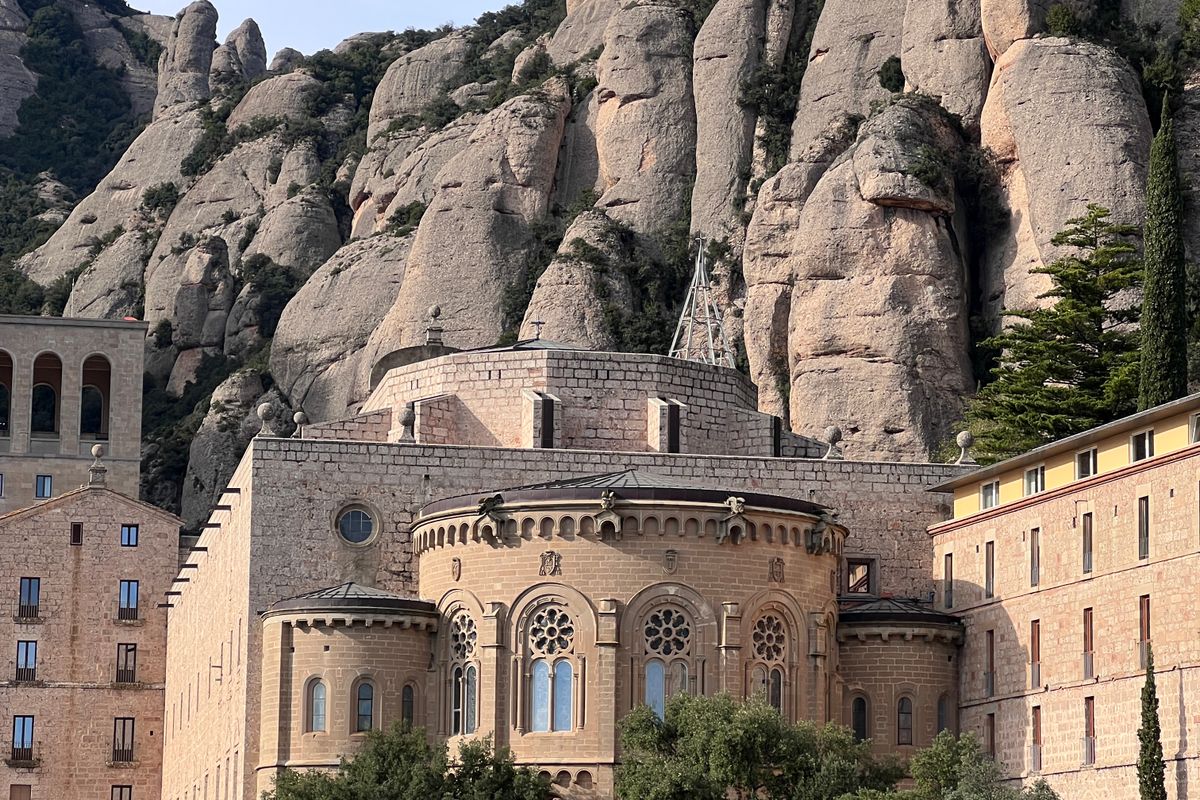
If you do one trip, do this one. Montserrat is a ridge of rounded grey pinnacles that looks computer-generated until you stand under it, and wedged into a shelf halfway up is a working Benedictine monastery roughly a thousand years old.
Inside the basilica is La Moreneta, the Black Madonna — a small Romanesque statue of dark wood that is the religious heart of Catalonia; the queue to file past her starts early. Time it right and you also catch the Escolania, the boys' choir, who sing most days around midday — one of the oldest choirs in Europe, in a space that does a lot of the work. Up top, two short funiculars and a web of ridge paths take over, the Sant Joan one dropping you at trailheads with views that go on for miles.
Getting there is half the fun. You take the FGC R5 train from Plaça Espanya toward Manresa — about an hour to the foot of the mountain — then choose your final ascent: the Cremallera rack railway, which grinds up in around fifteen minutes, or the Aeri cable car, a five-minute swing over the valley that is not for the queasy. Door to monastery runs roughly ninety minutes; combined tickets bundle the train and the mountain leg.
Go early. Montserrat by nine in the morning is a mountain sanctuary; Montserrat at two in the afternoon is a coach park with a gift shop. The same rock, a very different day.
Sitges, for when you just want the sea
Sitges is the easy one. Around forty minutes south on the Renfe R2 line — two or three trains an hour from Sants, Passeig de Gràcia and Estació de França — and you step out into a town that is half whitewashed old quarter, half beach resort, and entirely relaxed about it. It has been an artists' haunt and one of the most openly LGBTQ-friendly towns on the Mediterranean for decades, and that confidence is part of why people keep going back.
A seafront promenade curves past golden beaches, with the headland church of Sant Bartomeu making the postcard. For a rainy hour, the Cau Ferrat museum — once the home of the painter Santiago Rusiñol — is small, strange and worth it. Land here during the February Carnival and you get one of the loudest street parties in the region. Honestly, though, Sitges needs no plan: bring a swimsuit, eat seafood near the water, miss a train, catch the next one.
Girona, the prettiest of the lot
Girona is the trip that makes people quietly reconsider their whole itinerary. A fast AVE covers the distance in well under an hour from Sants; cheaper regional trains take longer and run more often. Either way you land a short walk from a walled medieval old town.
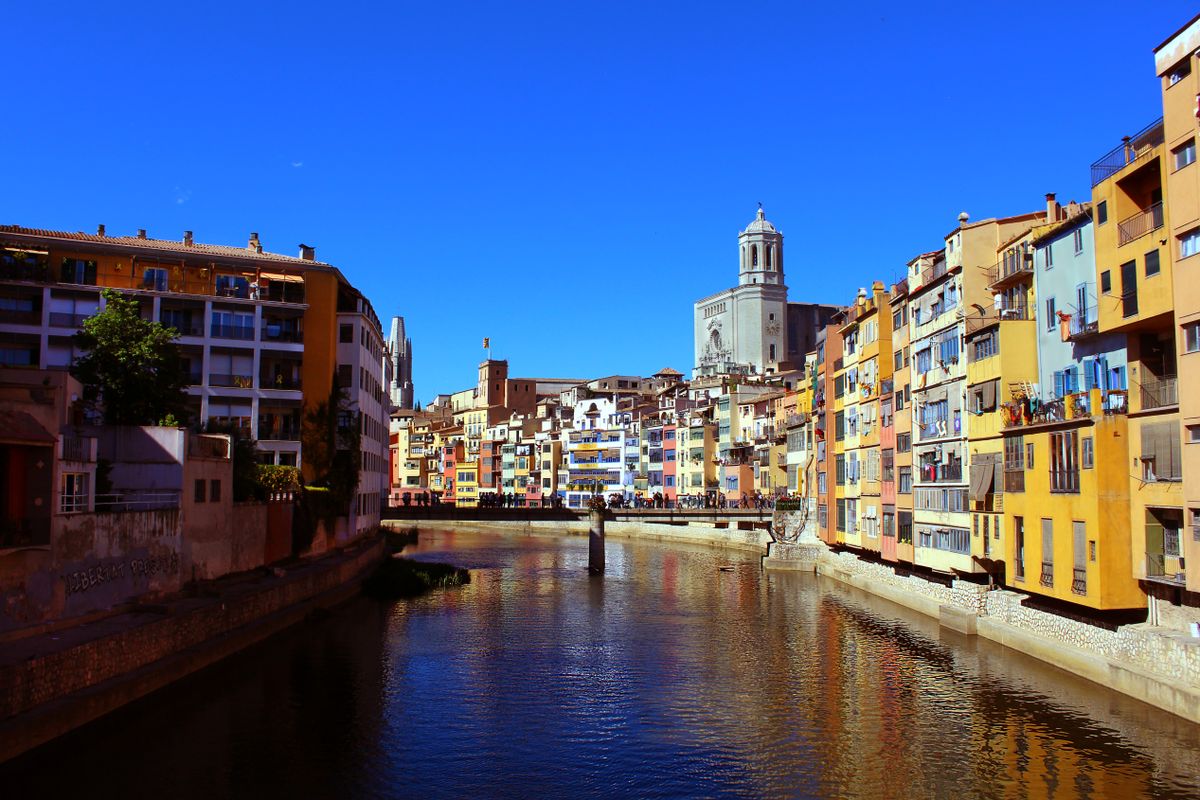
Its signature shot is the row of ochre and rust-red houses stacked along the Onyar river, best seen from one of the footbridges — including a small iron one from Gustave Eiffel's workshop. Climb the long flight of cathedral steps to Santa Maria, whose single Gothic nave is the widest in the world; fans of a certain dragon-heavy television series will recognise the staircase and several lanes from its King's Landing and Braavos scenes. Behind it all sits El Call, one of the best-preserved Jewish quarters in Europe — a knot of stone alleys you navigate mostly by instinct.
- Walk the walls. The Passeig de la Muralla rampart loops the old town with rooftop views and almost no crowds.
- Lose the map in El Call. Getting mildly lost is the point; it is small enough that you always pop out somewhere familiar.
- Add Figueres if you have the legs. Salvador Dalí's deranged theatre-museum is a short hop north, an easy pairing on a long day.
Tarragona, Rome with a sea breeze
For anyone who likes their history old and their views over water, Tarragona is hard to beat. This was Tarraco, a major Roman capital, and the ruins are not tucked in a museum — they are scattered through the living city. Its headline act is a Roman amphitheatre perched right above the Mediterranean, an eight-minute stroll along the seafront from the station, plus walls and a circus with underground tunnels you can walk.
It is around an hour by regular train, less on the fast services — a comfortable half-day, though we would happily give it a full one. It also pairs well with Sitges on the way back, since both sit on the same southern coast.
Salou and PortAventura, the family wildcard
This one is different, and we will be straight about it: Salou is not a place you go for medieval atmosphere. It is a long-sand beach-resort town on the Costa Daurada, about a hundred kilometres southwest of Barcelona, and most visitors come for what sits next door — PortAventura World, the big theme park, with its Ferrari Land section and a roster of serious coasters.
You reach Salou and the park by Renfe regional train, around an hour and a quarter to an hour and a half from Sants or Passeig de Gràcia, or by car. It is a long out-and-back, and the park alone can swallow a whole day. Our honest take:
- Doing the park as a day trip? Take the earliest train, buy the combined train-plus-entry ticket, and accept that you will not see much of Salou itself.
- Travelling with kids who came for the rides? Skip the day-trip maths and base yourselves in Salou for a night or two — beach in the morning, park in the afternoon, no race for the last train home.
That second option is the one we recommend for families — wringing the city's sights and a full theme-park day out of one trip usually means doing both badly.
So which one, if you only get a day
Choosing on instinct: Montserrat is the classic most people remember years later, so go, and go early. Girona is the prettiest and most relaxing, with a train fast enough that it never feels like a chore. Sitges is the shout for a beach-and-seafood day with zero planning, Tarragona for the history-minded. Salou is its own thing — brilliant with children, a stretch as a quick out-and-back.
Whichever you pick, the logistics are the story you met arriving from the airport: a clear train, a sensible time, a little patience at the machines. If you have not sorted the city yet, our notes on getting around Barcelona cover the metro and the regional lines these trips leave from, and the rundown on Barcelona El Prat: into the city & onward explains how the connections link up.
Hours shift with the season, so check before you go: the Montserrat visitor pages are clear on the train options, Tarragona's tourism office lists the amphitheatre hours, and for live times the Rodalies de Catalunya site beats any third-party app.