The table
Catalan tapas & vermouth
Forget the sangria-and-paella photo menus. The real Barcelona table is bread rubbed with tomato, a cold vermouth before lunch, and a handful of small plates ordered standing up.
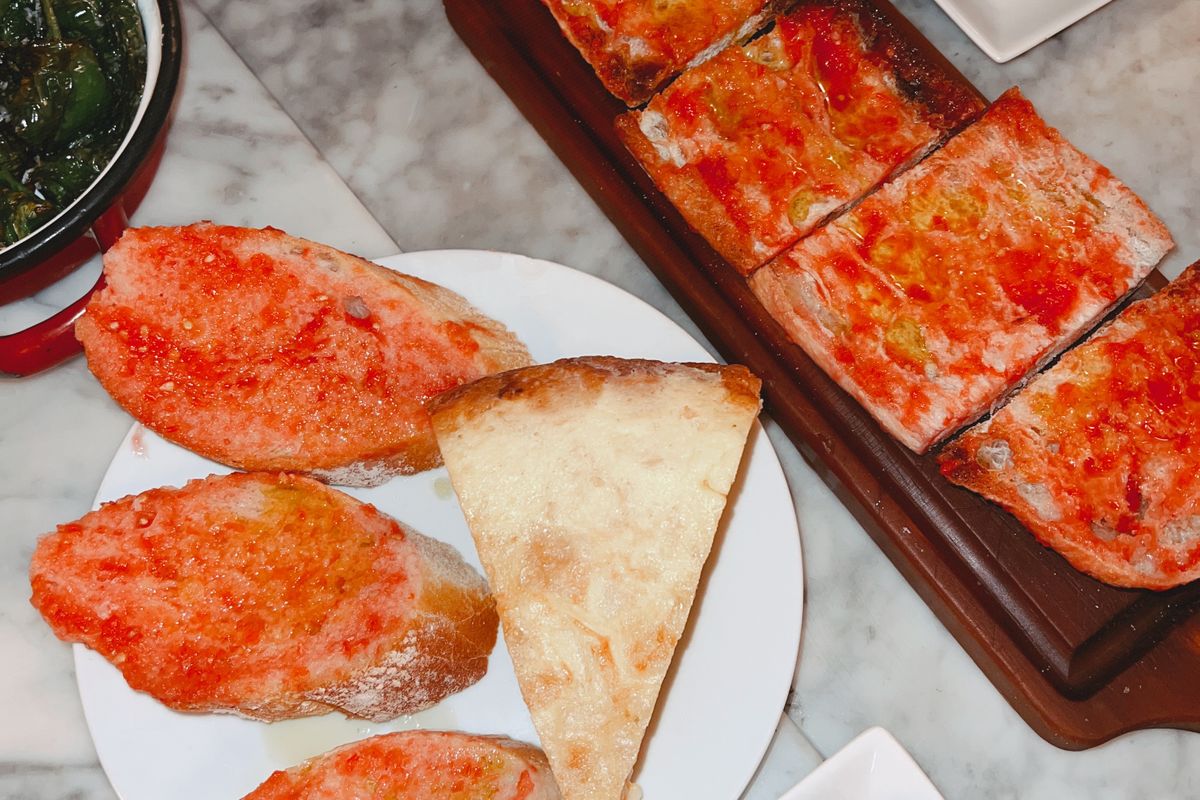
Start with the bread. Almost everything you eat in Barcelona arrives alongside pa amb tomàquet — country bread, sometimes toasted, rubbed with a halved ripe tomato until the crumb turns pink, then a slick of olive oil and a pinch of salt. No butter, no fuss. It sounds too plain to matter. Eat it next to a plate of jamón and you understand why Catalans put it under everything.
What follows is less a cuisine of grand dishes than a habit of grazing, and the city does it on its own clock. Lunch lands around two. Dinner rarely gets going before nine. Eat at seven and you'll share the room with other visitors and a waiter who hasn't fully woken up.
Tapas, pintxos and the toothpick trick
Two systems run side by side here, and it helps to know which one you've walked into. Tapas are small plates you order from a bar or a kitchen: you ask, they cook, the bill is added up at the end. Pintxos are the Basque idea, and they have colonised this city too — bite-sized things skewered on a slice of baguette, lined up along the counter under glass. You take what you fancy and keep the toothpicks.
That last part is the whole game. In a pintxo bar nobody writes anything down. You graze, stack the spent toothpicks on your plate, and when you're done the barman counts them and tells you what you owe. Runs on trust, and it works.
The toothpick tells you the price before you bite. A plain wooden stick is the cheap tier, usually a euro and a half to two. A fancy or coloured one — a little red ring, a different shape — means the pricier pintxos. Glance at the counter, not the menu.
The street most people are sent to is Carrer de Blai in Poble Sec, a pedestrian run of bar after bar where you can hop three or four doorways in an evening. It's fun and it's cheap, though the quality wobbles from one place to the next — pick the bars that are full of people speaking Catalan, skip the ones with laminated photos in the window.
The dishes worth knowing by name
You don't need the whole encyclopaedia. A working shortlist covers most of what's good, and it lets you order with some confidence instead of pointing.
- The bomba — Barceloneta's contribution: a crumbed ball of mashed potato stuffed with meat, deep-fried, and served with two sauces, one spicy and one garlicky aioli. Said to be invented down by the harbour, and best eaten there.
- Patatas bravas — fried potato in a peppery sauce. Everywhere does them; few do them as well as they pretend.
- Escalivada — peppers and aubergine roasted until soft and smoky, peeled, dressed in oil. Often piled on the inevitable bread.
- Esqueixada — a cold salad of shredded raw salt cod with tomato, onion and olives. Summer food, and a good test of a kitchen.
- Calçots with romesco — a winter ritual more than a tapa: long sweet spring onions charred black, peeled at the table, dunked in a nutty red sauce. Messy, brilliant, seasonal.
- Fideuà — the noodle answer to paella, made with short toasted pasta instead of rice, usually with seafood. Order this and skip the rice.
- Botifarra amb mongetes — grilled Catalan sausage with white beans. Plain, filling, the thing locals actually eat.
For dessert there's crema catalana — a custard with a burnt-sugar crust, cousin to crème brûlée and argued over endlessly about which came first. Have it. It's better than the argument.
Fer el vermut — the hour before lunch
The vermouth habit is the most Catalan thing on this page, and the easiest to join. Fer el vermut — "to do the vermouth" — is the late-morning ritual, strongest on weekends, of a cold glass before you sit down to eat. The vermut itself is poured from the tap or the bottle, red and bittersweet, served over ice with a slice of orange and, more often than not, a skewered olive. It comes with things to pick at while you talk.
Those somethings matter as much as the drink: a saucer of olives, salted anchovies, a tin of good conservas — mussels, cockles, razor clams — cracked open and eaten straight from the can with a toothpick. This is not a sad bowl of bar snacks. Tinned seafood is taken seriously here, and the better vermuterías build half their reputation on it.
How to order it
Ask for "un vermut" and you'll get the house red on the rocks — that's the right answer nine times in ten. Add a "sifón" if you want it longer with a splash of soda. Sunday, late morning, somewhere in Gràcia or Sant Antoni: that's the moment the ritual makes sense.
And then there's cava. The Catalan sparkling comes from the Penedès, the wine country an hour southwest, made by the same bottle-fermented method as Champagne from grapes you've probably never heard of — macabeu, xarel·lo, parellada. Most of it is born around the village of Sant Sadurní d'Anoia. A glass of it is a fraction of the price of the French stuff and pairs far better with fideuà than any cola-coloured sangria ever could.

Where to actually eat (and where not to)
Here's the blunt version. The closer a restaurant sits to La Rambla or the Sagrada Família, the harder it works to look like food and the less it tends to be. Picture menus in six languages, paella in a photo, a tout at the door — walk on. You'll pay tourist money for kitchen-cut corners.
Point yourself instead at the neighbourhoods where people live. The backstreets of Gràcia are full of small bars that fill with regulars; Sant Antoni has turned into one of the better eating districts in the city; the lanes behind the Born market reward a wander; Poble Sec keeps the pintxo crawl alive. Walk two streets off any famous sight and prices drop while the cooking improves.
One trick saves real money at lunch: the menú del dia, the weekday set lunch. Three courses, bread, often a drink, for a flat price that shames the à la carte tab. It's how the city feeds itself on a working day, and it's open to anyone who turns up around two.
The honest verdict
Skip the sangria-and-paella combo aimed squarely at visitors. Paella is Valencian, not Catalan, and sangria is mostly something served to tourists — locals reach for a vermut, a cava or a glass of Priorat instead. None of that means going hungry on the famous strips; it means giving them ten minutes and then walking inland to where the bread is rubbed with tomato and the bill is counted in toothpicks.
Get the rhythm right and the food does the rest. Vermouth before lunch, pintxos when you're peckish, a long late dinner, cava when there's something to mark. The bomba is best near the water, which makes a decent excuse to eat your way down to Barceloneta and the beaches and finish with sand in your shoes. That's the city actually eating — and it costs less than the photo menu by the cathedral.
Catalan cooking sits inside the UNESCO-listed Mediterranean diet, and to read up on cava before you order, Spain's official tourism site lays out the basics. Lonely Planet's Barcelona pages are a sane second opinion on where it all fits.